
The eleventh edition of the Festival of Protestant Culture connected Wrocław and Berlin — the two cities that shaped the life and thought of Dietrich Bonhoeffer. This year’s theme, “Being for Others,” expressed Bonhoeffer’s conviction that faith must take practical form in courage, responsibility, and care for one’s neighbor — values that speak powerfully to the challenges of our own time.
The Festival opened with a symbolic “Train to Culture” journey from Berlin to Wrocław, dedicated to reflection on Bonhoeffer’s life and witness. In Wrocław, participants joined the Dialogue Workshops in the Quarter of Mutual Respect — a district where four faith traditions coexist — and took part in cultural and theological events at the National Museum, led by Prof. Piotr Oszczanowski.
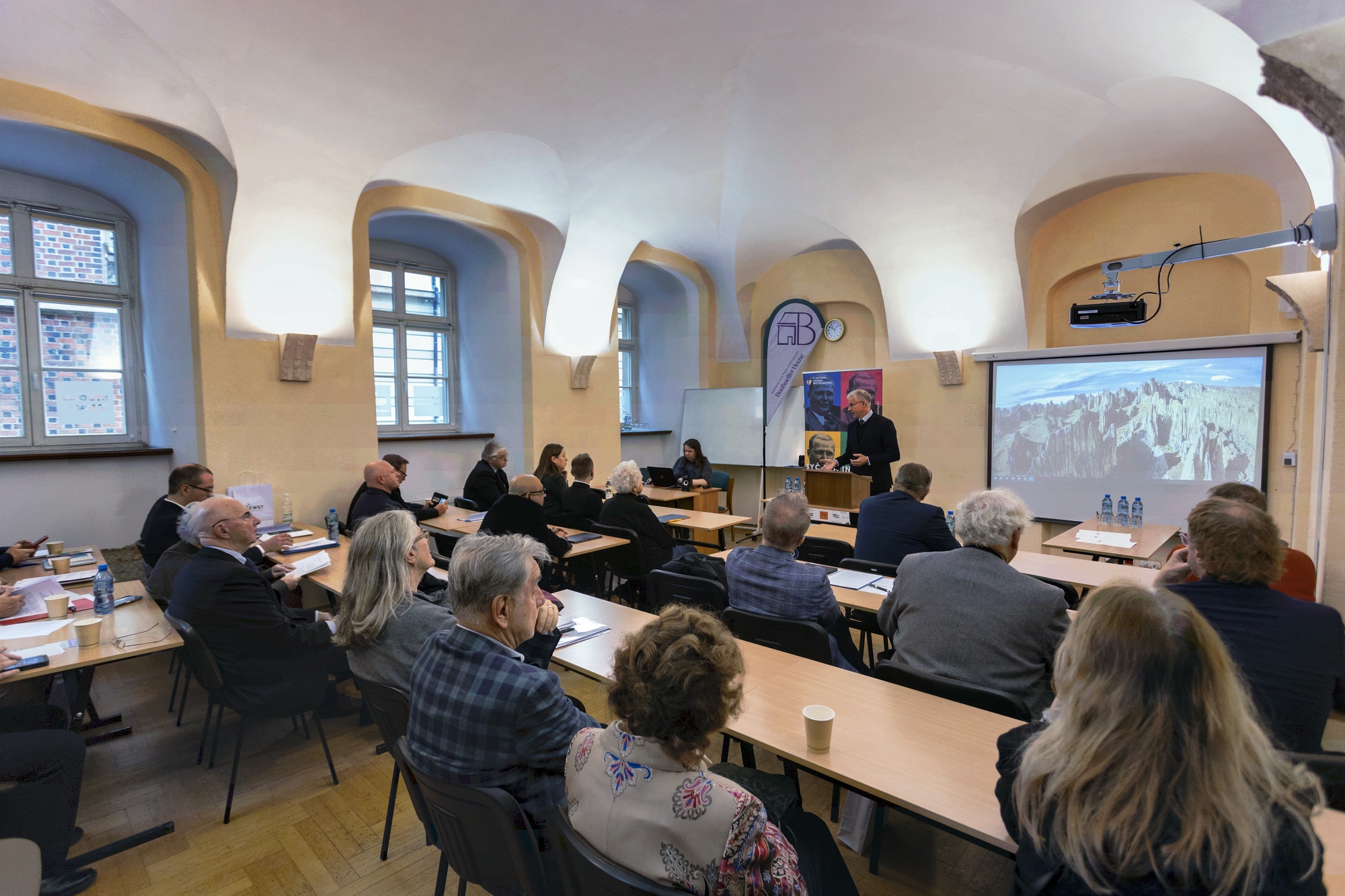
A central event was the international academic conference “(Un)Certainty: God and Human Existence,” organized by the Evangelical School of Theology, the Pontifical Faculty of Theology, and the University of Wrocław. Scholars from Poland, Germany, Egypt, Italy, and the United States discussed faith, doubt, and moral responsibility in a divided world. The conference was accompanied by the exhibition “We Were Neighbors” from the U.S. Holocaust Memorial Museum — a sober reminder of the call to compassion and accountability in human life.
The Festival reached its high point with the Bonhoeffer Gala in Wrocław’s historic Town Hall, where the first Dietrich Bonhoeffer Award “Being for Others” was presented. The main award went to Sister Małgorzata Chmielewska, leader of the “Bread of Life” community, whose daily work among the poor and marginalized embodies the Gospel message of love in action. The Honorary Award recognized Janusz Witt, a dedicated advocate for interfaith understanding and Polish–German reconciliation.

The Festival had a deeply ecumenical and practical spirit, bringing together Protestant, Catholic, Orthodox, and Jewish communities through prayer, music, and dialogue. The Four Faiths Walking Concert filled the Quarter of Mutual Respect with sacred music, inviting participants to experience unity through diversity.

An evening event at the German Consulate, “Bonhoeffer Up Close,” offered space for heartfelt conversation about faith, courage, and service in today’s world.

The Berlin segment, hosted by the Konrad Adenauer Foundation, included a discussion titled “How Political Can the Church Be?” with theologians Peter Zimmerling and Joel Burnell. The Festival concluded with a Reformation Service at the Church of Divine Providence, where clergy from different Christian traditions stood together in worship — a quiet but powerful sign of shared faith and hope.
Organized by the Evangelical School of Theology in Wrocław, the Lutheran Church, the Quarter of Mutual Respect, and partners from Poland and Germany — with support from the City of Wrocław — the Festival embodied Bonhoeffer’s call to live a faith that serves others.

In a time marked by division and uncertainty, the Festival offered a message both timely and timeless: that faith finds its deepest meaning not in words, but in acts of compassion, courage, and community — in being, as Bonhoeffer taught, truly for others.